We collect cookies to better configure the services of the website. By consenting, you allow us to obtain anonymised statistical data. More information can be found here. Thank you!
Ryan Keating zve na film Svatý pavouk
Receptors and Targets: Most drugs work by binding to specific receptors—proteins on or within cells. This interaction is often compared to a lock and key. When a drug binds, it can either activate the receptor (agonist) or block it (antagonist).
Metabolism: The body, primarily the liver, chemically alters the drug to make it easier to excrete. This often involves transforming active drugs into inactive metabolites, though some "prodrugs" are designed to become active only after metabolism. Basic Pharmacokinetics and Pharmacodynamics: An...
Efficacy and Potency: Efficacy refers to the maximum effect a drug can produce, while potency refers to the amount of drug required to produce a specific intensity of effect. The PK/PD Connection Receptors and Targets: Most drugs work by binding
Distribution: Once in the blood, the drug is carried to various tissues and organs. Distribution depends on blood flow, the drug’s ability to cross cell membranes (like the blood-brain barrier), and its tendency to bind to plasma proteins. Metabolism: The body, primarily the liver, chemically alters

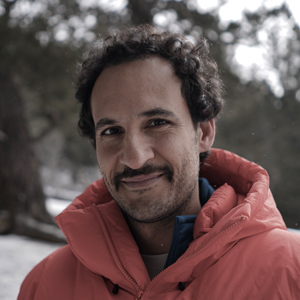
Ali Abbasi is a writer and director. He was born 1981 in Iran and left his studies in Tehran to move to Stockholm, where he graduated with a BA in architecture. He then studied directing at the National Film School of Denmark, graduating with his short film M FOR MARKUS in 2011. His feature debut, SHELLEY premiered at the Berlinale in 2016 and was released in the US. He is best known for his 2018 film BORDER, which premiered in Cannes, where it won the Prix Un Certain Regard. The film was chosen as Sweden’s Academy Award® Entry, was widely released internationally, won the Danish Film Award and was nominated for three European Film Awards including Best Director, Best Screenwriter & Best Film. He is currently shooting the TV adaptation of “The Last of Us” for HBO in Canada.
Watch Ali Abbasi's movie Border on Edisonline.